



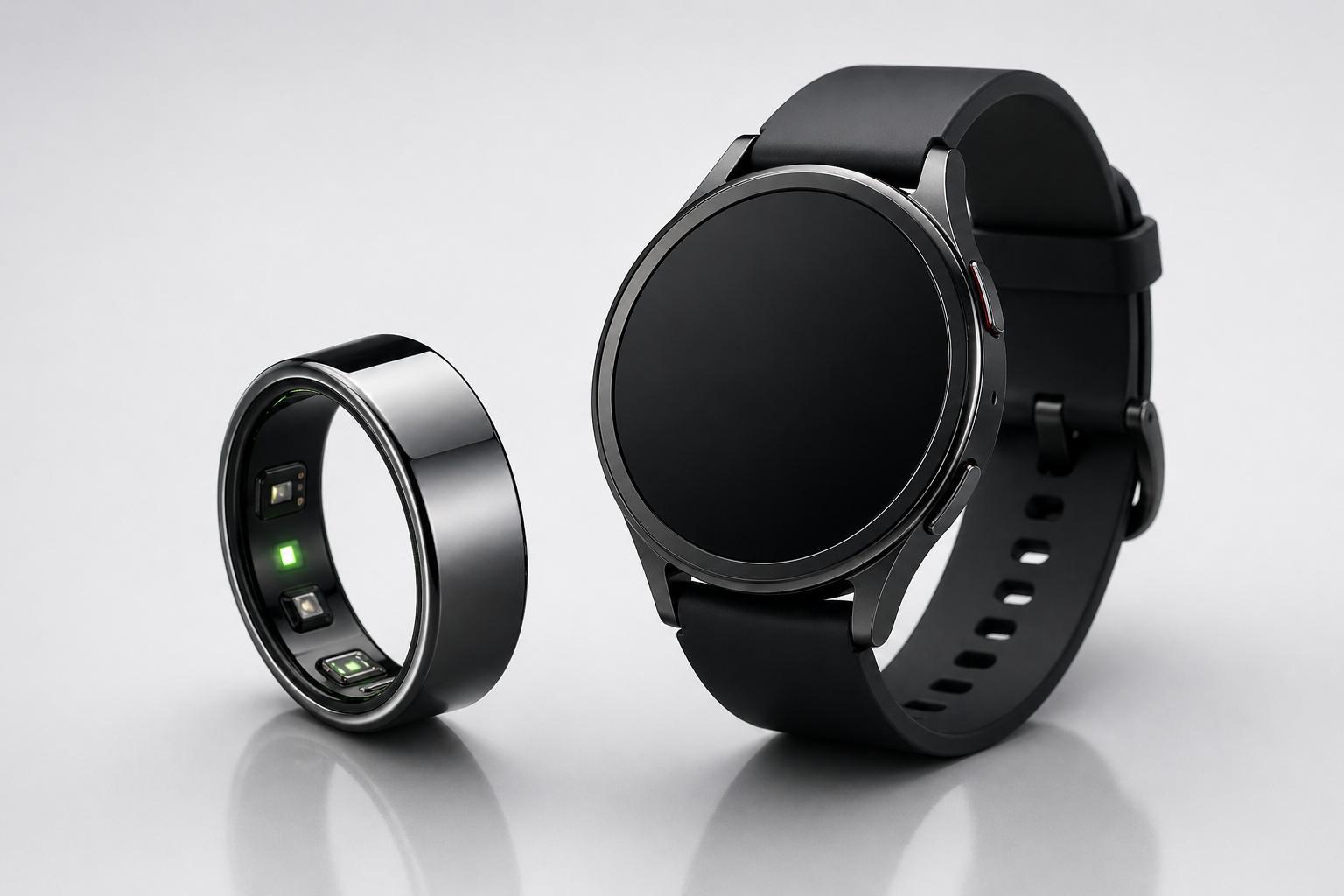
Wearable technology has come a long way from simple step counters to advanced health monitoring systems powered by artificial intelligence. Today, two devices are leading the race in personal health tracking: smart rings and smartwatches. While smartwatches have dominated the market for years, smart rings are quickly emerging as a strong competitor.
As users demand more accurate, comfortable, and discreet health tracking solutions, the debate around smart rings vs smartwatches is becoming more relevant than ever. So, which one truly represents the future of health tracking? Let’s break it down.
The Rise of Wearable Health Technology
The global shift toward preventive healthcare has accelerated the adoption of wearables. Instead of visiting a doctor after symptoms appear, users now rely on devices that continuously monitor vital signs such as heart rate, sleep patterns, activity levels, and even stress.
Smartwatches initially led this transformation by combining fitness tracking with smartphone-like features. However, smart rings are redefining the experience by focusing purely on health insights in a more compact form.
What Are Smart Rings?
Smart rings are small, lightweight wearable devices worn on your finger. Despite their minimal size, they pack powerful sensors that can track:
- Heart rate
- Sleep quality
- Blood oxygen levels
- Body temperature
- Activity and movement
Their biggest advantage lies in their discreet design. Unlike smartwatches, which are visible and sometimes bulky, smart rings blend seamlessly into everyday life.
What Are Smartwatches?
Smartwatches are multifunctional wearable devices worn on the wrist. They offer a combination of:
- Fitness and health tracking
- Notifications and calls
- Apps and connectivity
- GPS tracking
- Voice assistants
Devices like Apple Watch and Samsung Galaxy Watch have set the standard for what a smartwatch can do, making them an all-in-one solution for both productivity and health monitoring.
Design and Comfort: Minimalism vs Functionality
When it comes to design, smart rings clearly win in terms of comfort and convenience.
Smart rings are:
- Lightweight
- Non-intrusive
- Easy to wear 24/7 (including during sleep)
Smartwatches, on the other hand:
- Can feel bulky, especially during sleep
- Require regular removal for charging
- Are more noticeable and less subtle
For users who prefer a minimalist lifestyle, smart rings offer a more natural and comfortable experience.
Health Tracking Accuracy
Accuracy is one of the most critical factors in wearable technology.
Smart Rings
Smart rings often provide more accurate sleep and recovery data. Since they sit on your finger, where blood flow is strong and consistent, they can capture more precise biometric signals.
They are particularly strong in:
- Sleep tracking
- Heart rate variability (HRV)
- Recovery insights
Smartwatches
Smartwatches excel in:
- Real-time activity tracking
- Workout monitoring
- GPS-based tracking (running, cycling)
However, wrist-based sensors can sometimes be less accurate compared to finger-based measurements.
Battery Life: A Major Differentiator
Battery life is where smart rings significantly outperform smartwatches.
Smart Rings
- Typically last 5–7 days on a single charge
- Some models even last longer
- Designed for continuous wear
Smartwatches
- Usually last 1–2 days
- Require frequent charging
- Advanced features drain battery quickly
For users who want uninterrupted tracking, smart rings have a clear advantage.
Features and Functionality
Smart Rings: Focused and Efficient
Smart rings are designed primarily for health tracking. They do not try to replace your smartphone but instead complement it.
Key features include:
- Sleep and recovery insights
- Passive health monitoring
- Minimal interaction required
Smartwatches: All-in-One Devices
Smartwatches offer a broader range of features:
- Notifications and calls
- Music control
- Apps and integrations
- Fitness tracking and coaching
- Emergency features
If you want a device that acts like a mini smartphone, smartwatches are the better choice.
User Experience: Passive vs Interactive
Smart rings provide a passive experience. You wear them and forget about them while they continuously collect data in the background.
Smartwatches offer an interactive experience, allowing users to:
- Check messages
- Track workouts in real time
- Use apps and tools
The choice depends on whether you prefer automation or control.
Price and Accessibility
Price plays an important role in adoption.
Smart Rings
- Generally priced between ₹25,000–₹40,000
- Some require subscription fees for advanced insights
Smartwatches
- Wide range: ₹5,000–₹80,000+
- No subscription required for most features
Smartwatches are more accessible due to their broader price range, while smart rings are still considered premium niche devices.
The Role of AI in Wearables
Artificial intelligence is transforming both smart rings and smartwatches.
Modern wearables now:
- Analyze patterns in your health data
- Provide personalized recommendations
- Predict potential health issues
Smart rings are particularly strong in AI-driven recovery insights, while smartwatches are integrating AI for real-time coaching and assistance.
The Future: Convergence or Competition?
The future of health tracking may not be about choosing one over the other. Instead, we may see a hybrid ecosystem where both devices work together.
Possible trends include:
- Smart rings becoming more advanced with additional sensors
- Smartwatches improving battery life and comfort
- Deeper AI integration across devices
- Seamless data syncing between multiple wearables
Some users are already using both, a smartwatch during the day and a smart ring at night.
Challenges Ahead
Despite their growth, both technologies face challenges:
Smart Rings
- Limited functionality beyond health tracking
- Higher cost for fewer features
- Dependence on smartphone apps
Smartwatches
- Short battery life
- Bulkier design
- Information overload
Solving these challenges will determine which device dominates in the long run.
Which Is the Future?
So, smart rings vs smartwatches, who wins?
The answer depends on how users define the “future.”
- If the future is minimal, passive, and health-focused, smart rings are leading the way.
- If the future is connected, multifunctional, and interactive, smartwatches still hold the crown.
However, the bigger picture suggests that the future of health tracking lies in personalization and seamless integration, not just one device.
Conclusion
Smart rings and smartwatches each bring unique strengths to the table. While smartwatches offer versatility and connectivity, smart rings excel in comfort, battery life, and focused health insights.
As wearable technology continues to evolve, users will have more choices than ever. Whether you choose a ring, a watch, or both, one thing is clear: the future of health tracking is wearable, intelligent, and always connected.